
The intelligence loop behind the suit.
CloseRail is planned as a web-first AI operating layer: account intelligence, verified context, action permissions, source evidence, and admin health all working before the AI outputs advice.
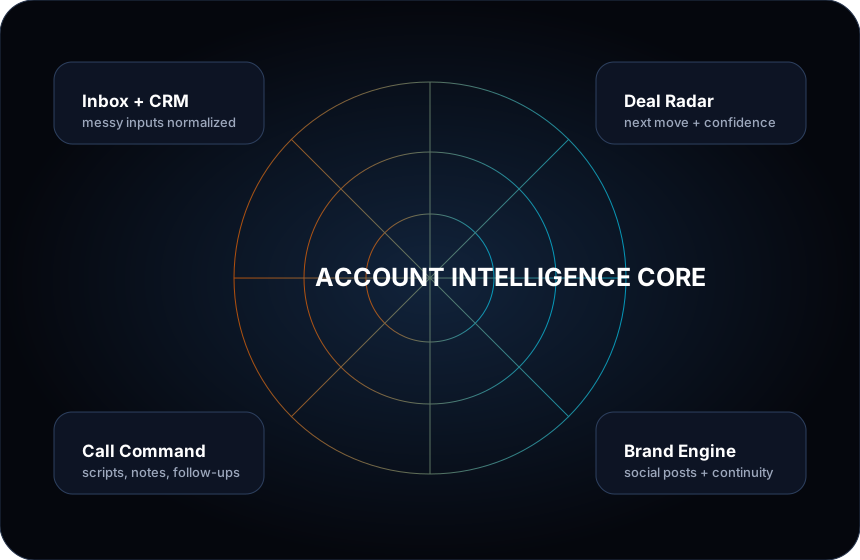
Account Intelligence Layer
Each account gets a private profile: role, company, offer, buyer type, writing style, deal history, notes, calls, social preferences, and career moves.
Verified AI Loop
AI reads live data, builds an evidence pack, checks doctrine and usage limits, proposes an action, verifies writes, then outputs.
Action Registry
The AI chat does not write directly. It routes updates through permission-checked actions: draft, task, stage change, note, social post, or intake.
Production architecture direction
| Layer | Purpose | Why it matters |
|---|---|---|
| Data Intake | Files, notes, photos, screenshots, CRM exports | Works with messy real-world selling before every native CRM is built. |
| Evidence Layer | Stores sources and timestamps | Reduces hallucination and shows why a recommendation exists. |
| Doctrine | Rules for privacy, sales ethics, writing style, billing, AI behavior | Keeps the system from becoming a loose chatbot. |
| Admin Health | Status for AI, integrations, jobs, billing, account intelligence | Makes the product operable at scale. |
Why this is different
Not another CRM
CRM stores records. CloseRail is designed to unify messy records, context, and next moves around the user.
Not just a chatbot
Chat routes through verified context, action permissions, and audit logs.
Not just enterprise revenue intelligence
CloseRail targets busy individual sellers and SMB teams who need a power layer without enterprise overhead.
Upload what you have.
The Data Intake layer is designed for typed data, pasted notes, screenshots, photos, scribbled notes, PDFs, spreadsheets, CRM exports, call recaps, and email snippets. It extracts entities, confidence, missing fields, and source evidence before anything becomes a recommendation.